Introduction: Why the Electric Scooter Revolution Is Just Getting Started
Picture this: you’re stuck in morning traffic, burning fuel, watching money evaporate with every idle minute. Now imagine gliding past all of that on a whisper-quiet electric scooter—zero emissions, zero fuel costs, and a grin you can’t wipe off your face.
That’s the reality millions of Indian commuters are waking up to in 2026.
The Indian EV two-wheeler market has transformed dramatically. With rising petrol prices, improved charging infrastructure, and a new generation of high-performance electric scooters landing on showroom floors, switching to an EV scooter is no longer just an eco-friendly choice—it’s the smart financial move.
Whether you’re a daily office commuter, a college student navigating city streets, or a parent looking for a reliable family runabout, this guide covers the best electric scooters for adults in India in 2026—ranked, reviewed, and compared so you can make a genuinely informed decision.
Let’s get into it.
Why Electric Scooters Are Dominating Indian Roads in 2026
The Economics Are Simply Undeniable
The cost of running a petrol scooter in India has never been higher. With fuel averaging ₹100+ per litre in most cities, the average commuter spends ₹3,000–₹5,000 per month on fuel alone.
An electric scooter, by contrast, costs as little as ₹15–₹25 per full charge, covering 80–150 km depending on the model. Over a year, that’s a saving of ₹25,000–₹40,000 for most riders—enough to cover a significant chunk of the scooter’s cost itself.
Government Push and FAME III Incentives
The Indian government’s FAME (Faster Adoption and Manufacturing of Electric Vehicles) scheme has continued to evolve, with FAME III subsidies making EV scooters more affordable than ever in 2026. Several state governments—including Delhi, Maharashtra, Gujarat, and Tamil Nadu—offer additional incentives ranging from ₹5,000 to ₹15,000 in direct purchase subsidies and road tax exemptions.
If you haven’t looked into the subsidies available in your state, you’re potentially leaving thousands of rupees on the table.
Charging Infrastructure Has Caught Up
One of the biggest concerns early EV adopters had was range anxiety—the fear of running out of charge mid-journey. In 2026, that anxiety is largely a thing of the past in Tier-1 and most Tier-2 cities. Major charging networks like Tata Power EV, Ather Grid, and Statiq have expanded aggressively, and most electric scooters now support home charging via a standard 5A socket.
How We Evaluated the Best EV Scooters in India 2026
Before diving into the list, here’s how we ranked these scooters. Every recommendation is based on a combination of:
- Real-world range (not just claimed figures)
- Build quality and reliability track record
- After-sales service network
- Value for money
- Technology, connectivity, and safety features
- User reviews and long-term ownership feedback
We didn’t just go by spec sheets. We considered real-world ownership data, community forums, expert road test feedback, and value across different rider profiles.
The 10 Best Electric Scooters for Adults in India 2026
1. Ather 450X Gen 4 — Best Overall EV Scooter
Price: ₹1,45,000 – ₹1,65,000 (ex-showroom, city-dependent)
Real-World Range: 110–130 km
Top Speed: 90 km/h
Charging Time: 0–80% in 3.2 hours (fast charger)
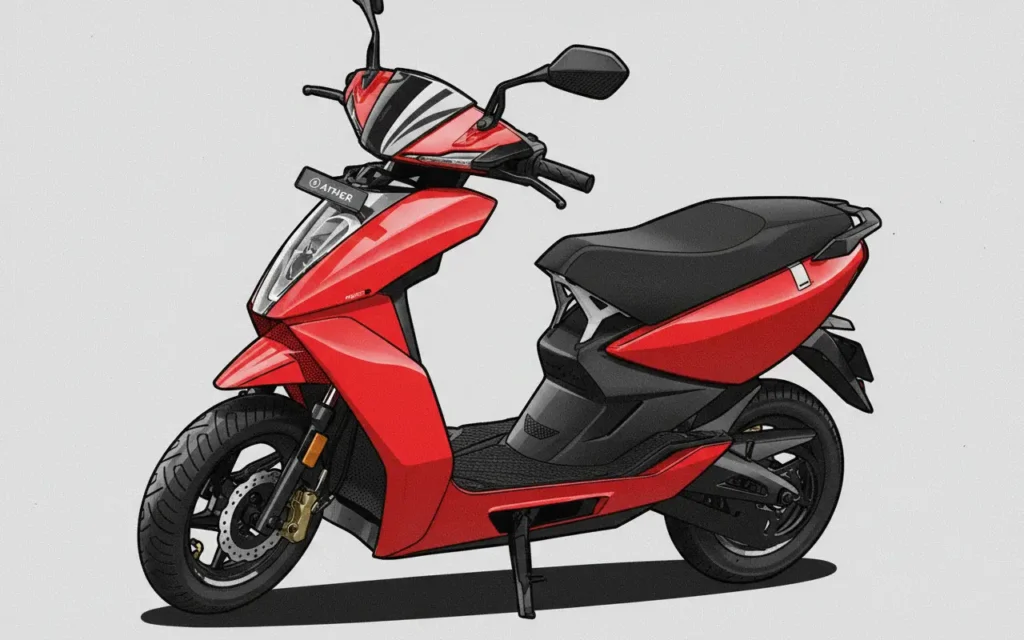
If there’s one scooter that defines the premium electric scooter experience in India, it’s the Ather 450X Gen 4. Ather has spent years refining their platform, and it shows.
The 450X feels like a product built with genuine obsession—the kind of attention to detail you’d expect from a company that genuinely loves making scooters. The touchscreen dashboard is crisp and responsive. The ride quality is plush. And the performance in “Warp” mode is genuinely thrilling for a city scooter.
What makes it stand out in 2026 is the improved battery thermal management system, which finally addresses the range drop issues that plagued earlier generations in hot summers. Real-world range is now consistently above 100 km in normal riding conditions.
Best for: Riders who want the best tech, best performance, and don’t mind paying a premium.
| Feature | Ather 450X Gen 4 |
|---|---|
| Battery | 3.7 kWh |
| Motor Power | 6.4 kW (peak) |
| Charging | Ather Grid + Home 5A |
| App Connectivity | Yes (OTA updates) |
| Warranty | 3 years / 30,000 km |
Pros:
- Best-in-class performance and acceleration
- OTA software updates keep it current
- Excellent Ather Grid fast-charging network
Cons:
- Premium pricing
- Service centers limited outside major cities
2. Ola S1 Pro Gen 3 — Best Feature-Packed EV Scooter
Price: ₹1,20,000 – ₹1,40,000
Real-World Range: 120–140 km
Top Speed: 120 km/h
Charging Time: 0–80% in 4.5 hours (standard)
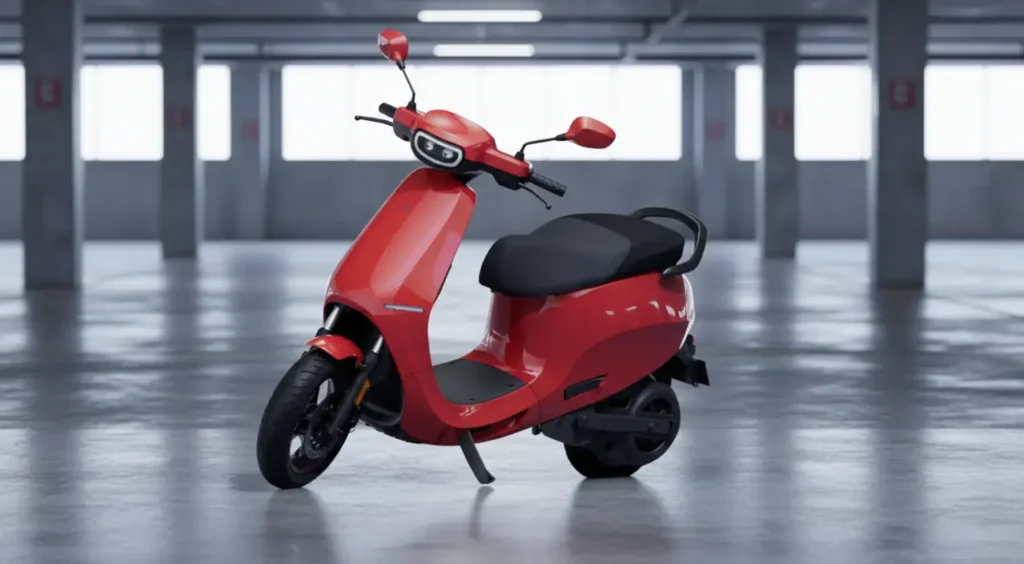
Ola Electric has come a long way from its rocky early days. The S1 Pro Gen 3 in 2026 is a genuinely mature product—faster, more reliable, and backed by a service network that has expanded to over 400 cities.
The scooter’s headline figure is its claimed range of 195 km, though real-world riding at 45–60 km/h in city conditions gives you a more realistic 120–140 km. That’s still best-in-class for the money.
The MoveOS 5.0 software platform is slick and feature-rich—from hill-hold assist to proximity unlock, it feels more like using a smartphone than operating a vehicle. Voice commands, integrated navigation, and an extensive companion app round out the package.
Best for: Tech enthusiasts and long-distance commuters who want maximum range per rupee.
Pros:
- Highest real-world range in its price segment
- Feature-rich software experience
- Aggressive pricing and frequent offers
Cons:
- Early ownership reliability still slightly behind Ather
- Software bugs occasionally require OTA fixes
3. TVS iQube S — Best for Reliability and Service Network
Price: ₹1,10,000 – ₹1,25,000
Real-World Range: 100–115 km
Top Speed: 82 km/h
Charging Time: 0–80% in 5 hours (standard)
TVS has over six decades of experience building two-wheelers in India. When they entered the EV space with the iQube, skeptics wondered if a legacy manufacturer could keep up with the EV-native startups. In 2026, the TVS iQube S answers that question definitively: yes, they absolutely can.
What TVS brings to the table is unmatched reliability and a service network that reaches deep into Tier-2 and Tier-3 cities. If you live outside a major metro, this alone makes the iQube S a compelling choice.
The ride quality is predictably excellent—TVS knows how to tune a chassis. The SmartXonnect platform provides solid connectivity without being overloaded with gimmicks. And the scooter’s build quality feels premium in ways that spec sheets don’t capture.
Best for: Riders who prioritize long-term reliability, wide service access, and trust in a legacy brand.
4. Bajaj Chetak Premium — Best Budget-Premium EV Scooter
Price: ₹95,000 – ₹1,10,000
Real-World Range: 105–120 km
Top Speed: 73 km/h
Charging Time: 0–80% in 5 hours
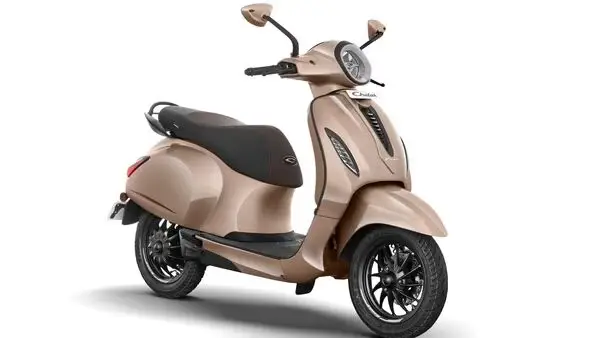
The Bajaj Chetak is an icon reimagined. The Premium variant for 2026 brings a metal body, retro-modern styling, and a refined riding experience at a price point that undercuts most of the competition.
What the Chetak does differently from its rivals is prioritize ride comfort and urban practicality over outright performance. It’s not the fastest scooter on this list, nor does it have the flashiest dashboard. But it’s incredibly pleasant to ride in city traffic, and the build quality—with its steel body—gives it a solidity that plastic-bodied rivals can’t match.
The IP67-rated waterproofing on the battery and motor means monsoon riding is genuinely worry-free. That’s a real-world benefit that matters enormously in Indian conditions.
Best for: Riders who value style, build quality, and monsoon-readiness over raw performance.
5. Hero Vida V2 Pro — Best by a Legacy Giant
Price: ₹1,05,000 – ₹1,20,000
Real-World Range: 110–125 km
Top Speed: 80 km/h
Charging Time: 0–80% in 4.5 hours
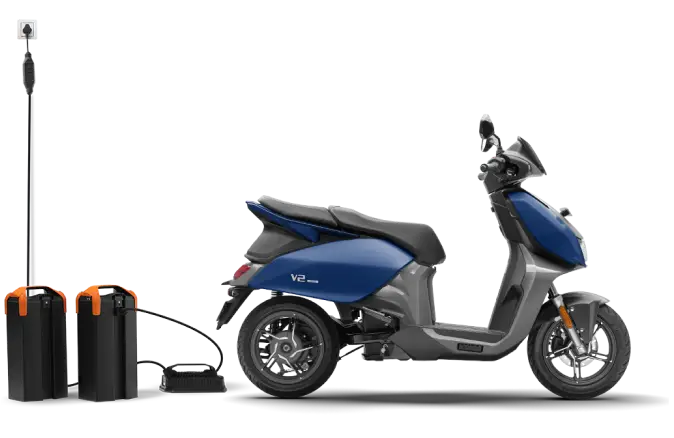
Hero MotoCorp entered the EV scooter space determined to leverage its unparalleled distribution network—and the Vida V2 Pro in 2026 shows that strategy paying off. With service centers in over 1,000 cities across India, Hero has the widest reach of any EV scooter brand.
The V2 Pro is a well-rounded scooter with 37 litres of under-seat storage (best in class), a practical removable battery option, and a smooth, confidence-inspiring ride. It’s not trying to be the most exciting scooter—it’s trying to be the most practical one for everyday Indian commuting. And it largely succeeds.
Best for: Riders outside metro cities who need wide service reach and everyday practicality.
6. Simple One Mark 2 — Best Performance EV Scooter Under ₹1.5 Lakh
Price: ₹1,15,000 – ₹1,35,000
Real-World Range: 150–170 km
Top Speed: 105 km/h
Charging Time: 0–80% in 3.5 hours
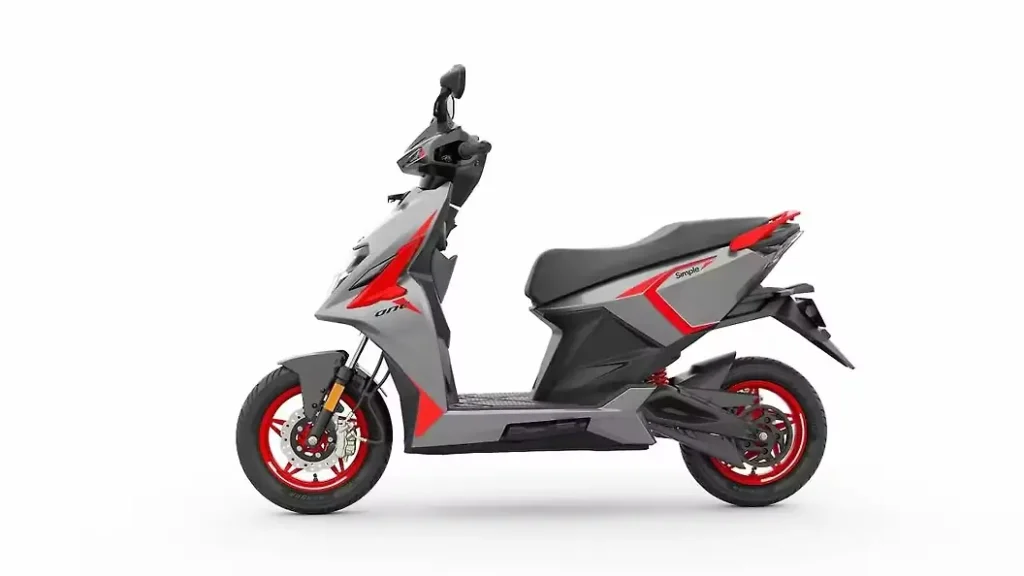
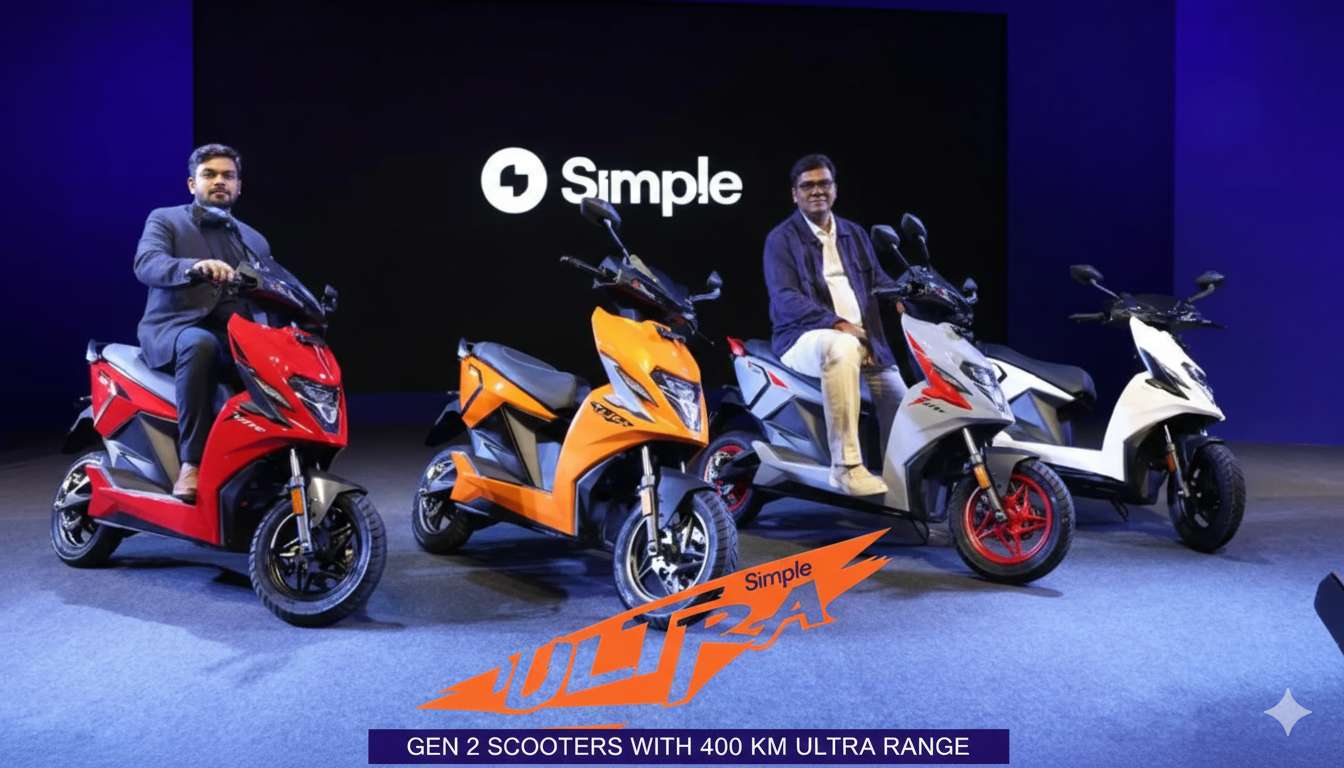
Simple Energy’s One Mark 2 has become something of a cult favourite among performance-oriented EV riders. The combination of 150+ km real-world range, 105 km/h top speed, and a sub-₹1.5 lakh price tag is genuinely hard to beat.
The scooter’s large 5 kWh battery is the headline, but what you notice when riding it is how confidently it handles highway speeds. Most scooters feel nervous above 80 km/h—the Simple One Mark 2 feels planted and composed well into triple digits.
The one caveat is Simple Energy’s service network, which is still growing. If you’re in Bengaluru, Chennai, Hyderabad, or Pune, you’re well covered. Elsewhere, check coverage before buying.
Best for: Performance-focused riders who do mixed city and highway riding.
7. Ampere Magnus EX — Best Value EV Scooter
Price: ₹75,000 – ₹88,000
Real-World Range: 85–100 km
Top Speed: 60 km/h
Charging Time: 0–80% in 5 hours
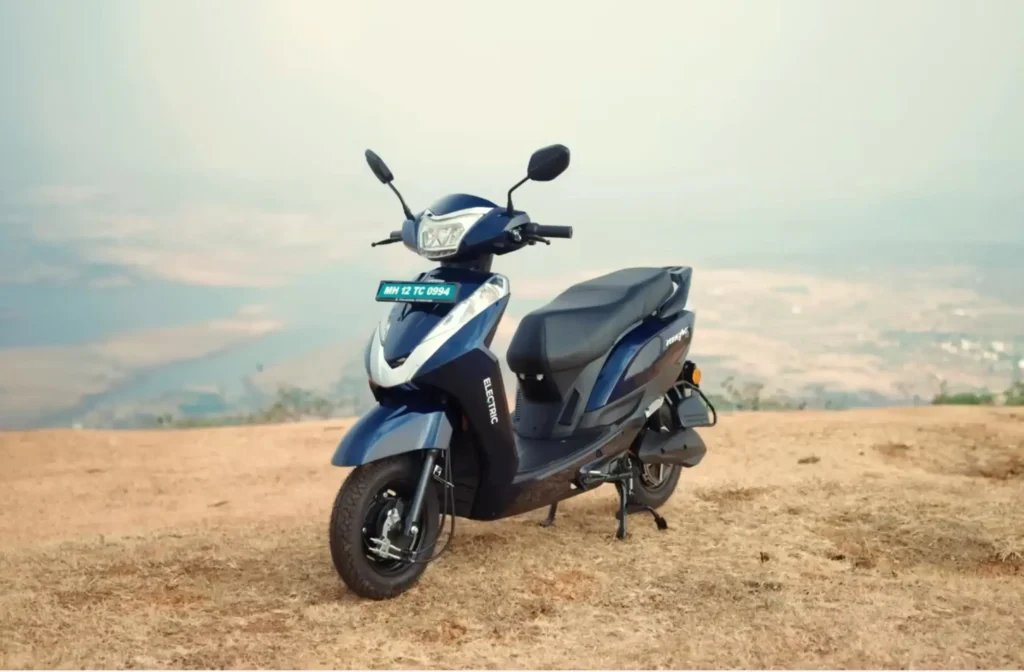
Not everyone needs a ₹1.5 lakh premium EV scooter. For budget-conscious buyers who still want the benefits of electric mobility—low running costs, low maintenance, and smooth urban riding—the Ampere Magnus EX delivers outstanding value.
At under ₹88,000 (ex-showroom), it’s one of the most affordable scooters on this list. The real-world range of 85–100 km covers the daily commute of the vast majority of Indian urban riders (average daily commute: 20–30 km). And the Greaves-backed service network provides reasonable post-purchase support.
Best for: First-time EV buyers and budget-conscious commuters with predictable short daily rides.
8. Revolt RV400 BRZ — Best Electric Scooter/Motorcycle Crossover
Price: ₹1,25,000 – ₹1,40,000
Real-World Range: 130–150 km
Top Speed: 85 km/h
Charging Time: 0–80% in 4.5 hours (fast charge)
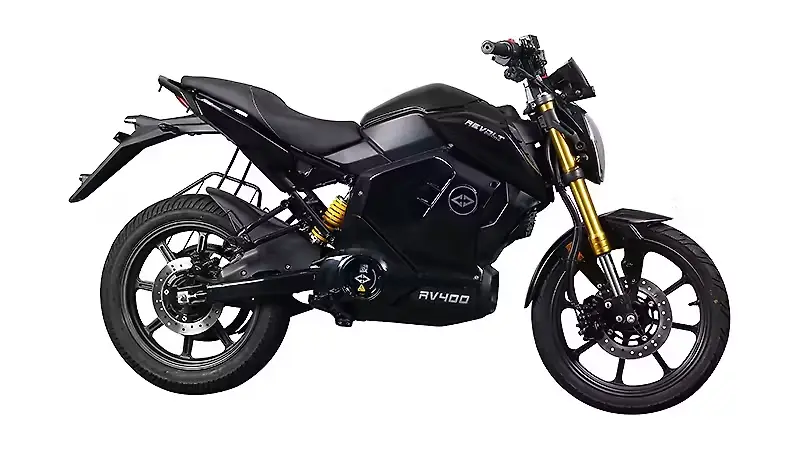
The Revolt RV400 BRZ sits in an interesting space—it’s technically a motorcycle in build, but rides with the accessibility of a scooter. For riders who want a more aggressive, upright riding position without sacrificing urban practicality, it’s a unique proposition in 2026.
The switchable battery system is particularly clever: the RV400 BRZ supports Revolt’s battery-swap network in select cities, meaning you can swap a depleted battery for a fresh one in under 2 minutes. For urban riders who don’t have home charging access, this changes the ownership equation entirely.
Best for: Riders who want motorcycle styling with scooter practicality, or those in battery-swap network cities.
9. Greaves Eltra — Best EV Scooter for Women Riders
Price: ₹80,000 – ₹95,000
Real-World Range: 90–105 km
Top Speed: 63 km/h
Charging Time: 0–80% in 4.5 hours
The Greaves Eltra has been specifically designed with ergonomics and urban practicality in mind. It features a low seat height of 760mm, making it accessible for shorter riders, and a step-through design that’s particularly convenient for saree-clad riders—a real-world consideration that most scooter brands ignore completely.
Beyond ergonomics, the Eltra offers solid performance for city riding, a smartphone-connected instrument cluster, and the backing of Greaves’ service network.
Best for: Shorter riders, women commuters, and anyone who values ergonomic accessibility.
10. Okinawa Okhi-90 — Best EV Scooter for Long Commutes
Price: ₹85,000 – ₹1,00,000
Real-World Range: 155–170 km
Top Speed: 80 km/h
Charging Time: 0–80% in 4 hours
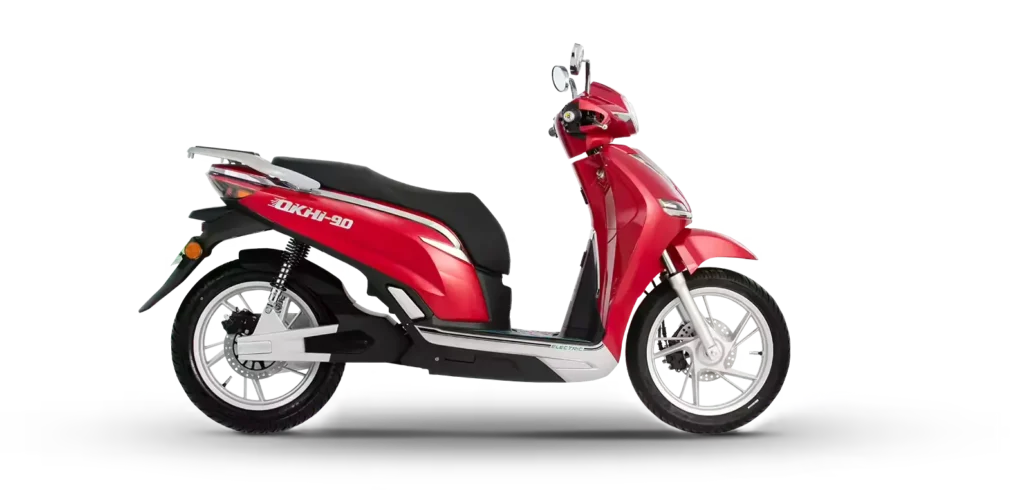
For commuters who clock serious daily distances—think 40–60 km one-way commutes that are increasingly common in sprawling metro areas—the Okinawa Okhi-90 deserves serious consideration. Its real-world range of 155–170 km is among the highest in its price segment.
The Okhi-90 uses Okinawa’s own proprietary LITHICS battery technology, which the company claims offers better cycle life and thermal stability than standard lithium-ion packs. Independent long-term testing broadly confirms this claim—battery degradation after 2 years of heavy use is notably lower than competitors.
Best for: Long-distance daily commuters who need maximum real-world range on a budget.
Side-by-Side Comparison: Top 5 EV Scooters in India 2026
| Model | Price (Approx.) | Real Range | Top Speed | Best For |
|---|---|---|---|---|
| Ather 450X Gen 4 | ₹1,45,000+ | 110–130 km | 90 km/h | Premium performance |
| Ola S1 Pro Gen 3 | ₹1,20,000+ | 120–140 km | 120 km/h | Tech + Range |
| TVS iQube S | ₹1,10,000+ | 100–115 km | 82 km/h | Reliability |
| Bajaj Chetak Premium | ₹95,000+ | 105–120 km | 73 km/h | Build quality |
| Simple One Mark 2 | ₹1,15,000+ | 150–170 km | 105 km/h | Performance |
What to Look for When Buying an Electric Scooter in India
Battery Size and Real-World Range
The single most important spec for Indian riders is real-world range—not the manufacturer’s claimed range, which is typically tested under ideal lab conditions. A good rule of thumb is to assume your real-world range will be 15–20% lower than the claimed figure.
For most urban commuters with a 20–30 km daily round trip, any scooter with a 90+ km real-world range is more than sufficient. For longer commutes or riders who hate charging frequently, aim for 120 km+.
Charging Options and Time
Check whether the scooter supports fast charging. A scooter that takes 8 hours to charge from empty creates genuine inconvenience if you’re relying on overnight home charging. Look for scooters that offer 0–80% in under 5 hours on standard home charging, with fast-charging options available.
Also check: does the scooter support portable charging (charging from a standard 5A household socket)? This is invaluable during travel or power cuts.
Service Network and After-Sales Support
This is perhaps the most underrated factor in the buying decision. A scooter with a thin service network can turn ownership into a nightmare—especially for complex EV-specific issues that not every technician can handle.
Before buying, check how many authorized service centers exist in your city and the nearest one to your home or office. EV-native brands like Ather have excellent urban coverage; legacy brands like TVS and Hero have unmatched rural/semi-urban reach.
Build Quality and Weather Resistance
India’s diverse climate—from Rajasthan’s extreme heat to Kerala’s monsoon flooding—demands scooters built to handle harsh conditions. Look for IP ratings on the battery and motor (IP65 or higher is ideal), and check community forums for reports of rust, corrosion, or waterproofing issues.
Total Cost of Ownership
When evaluating price, look beyond the sticker. Factor in:
- Subsidies (FAME III + state-level)
- Annual maintenance costs (EVs are significantly lower—typically ₹2,000–₹4,000/year vs ₹8,000–₹15,000 for petrol)
- Insurance (EV insurance is slightly higher but offset by lower servicing costs)
- Battery replacement cost at end of warranty period (typically ₹20,000–₹50,000 depending on battery size)
Electric Scooter Ownership Tips: Getting the Most From Your EV
Maximize Your Range
- Ride in Eco mode for daily commuting—reserve Sport/Warp modes for overtaking or highway runs
- Maintain tyre pressure at recommended levels—even slightly under-inflated tyres can reduce range by 5–10%
- Avoid aggressive acceleration—smooth, gradual throttle inputs dramatically extend range
- Use regenerative braking—in traffic-heavy Indian roads, regen braking can recover 10–15% of energy
- Pre-condition your scooter if it has this feature—starting a ride with a temperature-managed battery gives you better range
Charging Best Practices
- Charge to 80–90% for daily use rather than 100%—this extends battery longevity
- Avoid letting the battery drop below 10% regularly
- Use the manufacturer’s recommended charger—cheap third-party chargers can damage battery cells
- Charge in shade or indoors when possible—extreme heat during charging accelerates degradation
Monsoon and Maintenance Tips
- Wipe down electrical connectors with a dry cloth after heavy rain
- Keep the charging port cover closed when not in use
- Schedule a dealer inspection at the start of monsoon season
- Check brake pads every 6 months (they last significantly longer on EVs due to regen braking, but still wear)
Electric Scooters vs Petrol Scooters: The Real-World Numbers
Let’s break down the actual 5-year cost comparison for a typical Indian urban commuter doing 30 km/day:
| Cost Factor | Petrol Scooter (Honda Activa 6G) | EV Scooter (Ather 450X) |
|---|---|---|
| Purchase Price | ₹80,000 | ₹1,45,000 |
| Fuel/Charging (5 years) | ₹1,08,000 | ₹16,000 |
| Maintenance (5 years) | ₹40,000 | ₹10,000 |
| Insurance (5 years) | ₹25,000 | ₹30,000 |
| Total 5-Year Cost | ₹2,53,000 | ₹2,01,000 |
The EV scooter costs ₹52,000 less over 5 years, despite the higher upfront price. And this doesn’t account for subsidies, which could reduce the EV’s purchase price by ₹10,000–₹25,000 further.
The math is clear: buying an electric scooter in 2026 is not just an environmental choice—it’s the financially smarter one for most Indian commuters.
The Future of Electric Scooters in India: What’s Coming in 2026–2027
Solid-State Batteries on the Horizon
Several manufacturers have announced solid-state battery prototypes that promise double the energy density at half the weight of current lithium-ion packs. While mass-market availability is still 2–3 years away, some premium models may offer solid-state options as early as late 2026.
Swappable Battery Ecosystems
The battery-swap model—pioneered by Gogoro in Taiwan and being adopted by Revolt and Sun Mobility in India—is gaining momentum. Rather than charging a fixed battery, you swap a depleted one for a fully charged one at a kiosk in under 2 minutes. As swap networks expand, this could fundamentally change EV scooter ownership in India.
V2G (Vehicle-to-Grid) Technology
Some 2026 models are beginning to support V2G charging, which allows the scooter’s battery to feed electricity back into the home grid during peak demand. This turns your scooter into a small home energy storage unit—a particularly valuable feature during India’s frequent grid instability events.
FAQs: Best Electric Scooters in India 2026
What is the best electric scooter in India in 2026?
The Ather 450X Gen 4 is widely regarded as the best overall electric scooter in India in 2026 for its combination of real-world performance, technology, and reliability. The Ola S1 Pro Gen 3 offers the best value for range-focused buyers, while TVS iQube S is best for riders who prioritize service network reach and long-term reliability.
Which electric scooter has the longest real-world range in India?
As of 2026, the Simple One Mark 2 and Okinawa Okhi-90 offer among the best real-world ranges, both delivering 150–170 km per charge under normal city riding conditions. The Ola S1 Pro Gen 3 also delivers 120–140 km real-world range consistently.
How much does it cost to charge an electric scooter in India?
The cost to fully charge an electric scooter in India varies by state electricity tariff but typically ranges from ₹12 to ₹25 for a full charge covering 80–150 km. At home (domestic tariff of ₹6–8/kWh), charging a 3 kWh battery costs roughly ₹18–24. Public fast chargers cost slightly more—around ₹6–10 per kWh.
Are electric scooters safe in heavy rain and flooded roads?
Most current EV scooters carry IP ratings (typically IP65–IP67) that protect against water ingress during normal rain and shallow water crossings. However, submerging the scooter in floodwater or repeatedly riding through deep standing water can damage electrical components over time. The Bajaj Chetak Premium’s IP67 rating offers the strongest monsoon protection in its segment.
What government subsidies are available for electric scooters in India in 2026?
Under FAME III, electric scooters meeting local manufacturing requirements receive central subsidies of ₹5,000–₹10,000. Additionally, states like Delhi (₹5,000 + road tax waiver), Maharashtra (₹10,000), and Gujarat (₹20,000 for SGST refund) offer their own incentives. Check your state’s EV policy for the most current figures.
How long does an electric scooter battery last before replacement?
Most EV scooter batteries are rated for 1,500–2,000 charge cycles, equating to roughly 5–7 years of daily use for the average commuter. Battery warranties typically cover 3–5 years or 50,000 km. After warranty expiry, replacement batteries typically cost ₹20,000–₹50,000 depending on capacity.
Can I charge an electric scooter at home without a special outlet?
Yes. All major electric scooters sold in India support home charging via a standard 5A socket (the same socket used by most home appliances). A dedicated EV charging point (typically a 15A socket or wall-box charger) will reduce charging time significantly but is not mandatory for most riders.
Which is the best electric scooter for long-distance travel in India?
For long-distance travel (intercity trips), the Simple One Mark 2 and Ola S1 Pro Gen 3 offer the best range-per-charge. However, for true long-distance touring, you’ll need to plan charging stops carefully—ideally at fast-charging stations spaced within your range. The growing Ather Grid and Tata Power EV networks make intercity EV travel increasingly feasible on major highway corridors.
Is buying an electric scooter worth it in India in 2026?
For the vast majority of urban and semi-urban commuters in India, buying an electric scooter in 2026 is absolutely worth it. The 5-year total cost of ownership is lower than equivalent petrol scooters, running costs are significantly lower, maintenance is minimal, and the riding experience is smoother and quieter. The main considerations are charging access (home charging is ideal) and service network reach in your area.
Which electric scooter brand has the best after-sales service in India?
TVS and Hero have the widest service networks by geography, making them the most reliable choice in smaller cities and towns. Ather has the best-rated service quality in the cities where it operates. Ola Electric has expanded rapidly and now covers 400+ cities, though user satisfaction scores for service still trail legacy brands slightly.
Conclusion: Choose Your Electric Future Wisely
The best electric scooter for you isn’t necessarily the one with the highest range or the most impressive spec sheet. It’s the one that fits your daily riding pattern, your budget, your city’s charging infrastructure, and the service network in your area.
Here’s a quick recap of our top recommendations by rider type:
- Best overall: Ather 450X Gen 4
- Best value for range: Ola S1 Pro Gen 3
- Best for reliability: TVS iQube S
- Best build quality: Bajaj Chetak Premium
- Best performance: Simple One Mark 2
- Best budget pick: Ampere Magnus EX
- Best long commute: Okinawa Okhi-90
The EV revolution in India isn’t coming—it’s already here. Every month you delay the switch to electric is another month of fuel bills, maintenance costs, and emissions you could have avoided.
If this guide helped you narrow down your choices, share it with a friend or family member who’s on the fence about going electric. And if you’ve already made the switch, drop a comment below with your experience—which scooter did you go with, and has it lived up to the promise?
The road ahead is electric. Time to ride it.
Disclaimer: Prices mentioned are approximate ex-showroom figures and may vary by city, dealership, and applicable subsidies. Always verify current pricing and subsidy eligibility with your local dealer before purchase.