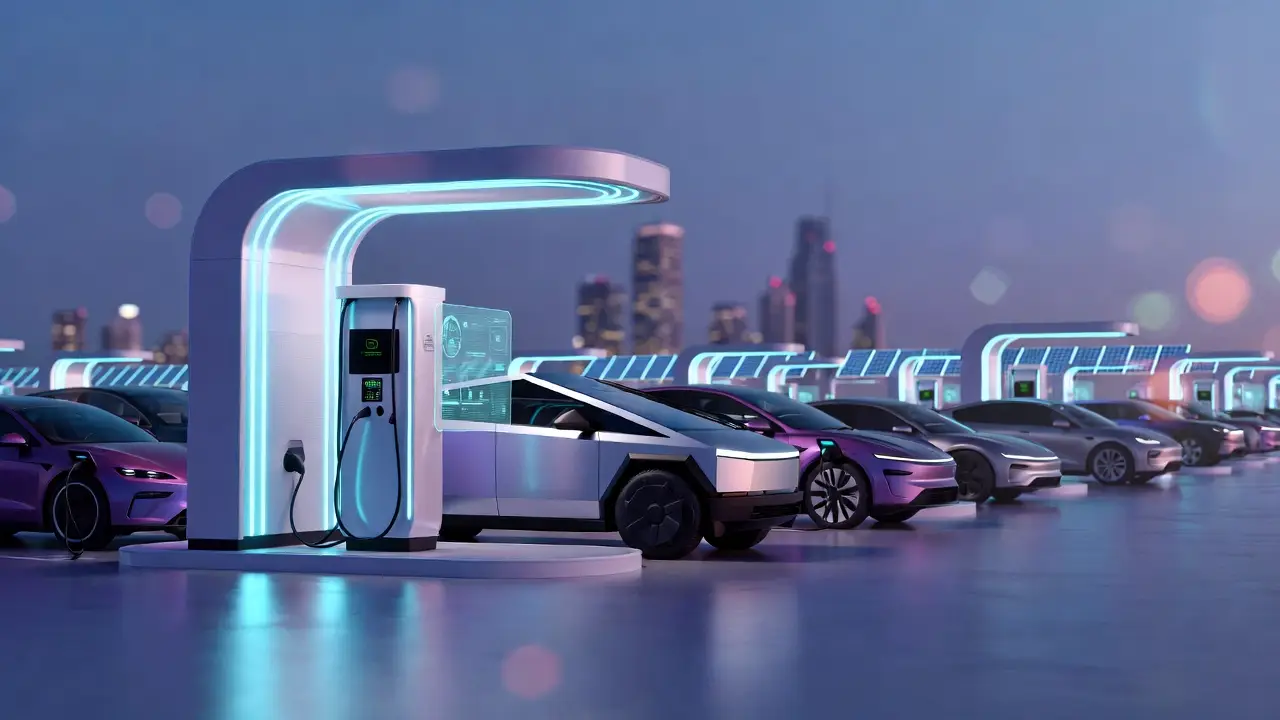
The electric vehicle revolution is here, and it’s transforming how we think about transportation. But here’s the thing that keeps many potential EV buyers up at night: where and how will I charge my car?
If you’ve ever felt anxious about EV charging infrastructure, you’re not alone. Range anxiety is real, but the good news is that electric vehicle charging stations are popping up everywhere—from your local Sainsbury’s car park to motorway service stations and even your own driveway.
In this comprehensive guide, we’ll walk you through everything you need to know about EV charging points, from understanding the different types to finding the best charging locations near you. Whether you’re a current EV owner or considering making the switch, this guide will help you navigate the charging landscape with confidence.
Understanding Electric Vehicle Charging Stations: The Basics
Let’s start with the fundamentals. An electric vehicle charging station, also called an EV charging point or EVSE (Electric Vehicle Supply Equipment), is essentially a fuel pump for your electric car. But unlike traditional petrol stations, EV charging infrastructure is far more diverse and accessible.
Think of it this way: while you could only fill your petrol car at a fuel station, you can charge your EV at home while you sleep, at work while you’re in meetings, or at the shops while you’re picking up groceries. This flexibility is one of the biggest advantages of electric vehicle ownership that people don’t fully appreciate until they experience it.
The charging station market has exploded in recent years. According to industry data, there are now over 65,000 public charging points across the UK alone, spread across more than 35,000 locations. That’s more charging locations than traditional petrol stations.
The Three Types of EV Charging You Need to Know
Understanding the different types of charging is crucial for planning your EV lifestyle. Let’s break it down in simple terms.
Slow Charging (3-7 kW)
This is your overnight charging solution. Slow chargers typically use a standard 3-pin plug or a dedicated 7kW wall box. They’re perfect for home charging because you can plug in when you get home from work and wake up to a full battery.
A slow charger will add about 15-30 miles of range per hour of charging. That might not sound impressive, but remember: you’re sleeping for 7-8 hours anyway. For most people who drive less than 40 miles daily, slow charging at home covers all their needs.
Fast Charging (7-22 kW)
Fast chargers are what you’ll typically find at destinations like supermarkets, car parks, and gyms. These charging points can add 30-60 miles of range per hour, making them ideal for top-up charging while you’re doing other activities.
This is where services like Sainsbury’s EV charging really shine. You can plug in while shopping and add significant range to your battery in the time it takes to do your weekly grocery run.
Rapid and Ultra-Rapid Charging (50-350 kW)
These are the game-changers for long-distance travel. Rapid chargers can charge most EVs to 80% in 30-40 minutes, while ultra-rapid chargers can do it in as little as 15-20 minutes for compatible vehicles.
You’ll find these primarily at motorway service stations and major transport hubs. They’re designed for when you need to get back on the road quickly during longer journeys.
How Electric Car Charging Stations Actually Work
The technology behind EV charging stations is fascinating yet straightforward. When you plug your car into a charging point, several things happen almost instantly.
First, the station and your vehicle communicate through the charging cable. They’re essentially having a conversation about how much power your car can accept, what’s the current battery level, and what charging speed is optimal. This smart communication prevents overcharging and ensures safe, efficient power transfer.
The charging station then converts AC (alternating current) electricity from the grid into the appropriate voltage and current for your vehicle’s battery. For rapid DC (direct current) chargers, this conversion happens at the charging station itself, which is why they can deliver power so much faster.
Most modern charging stations also connect to a network, allowing you to start and stop charging sessions through smartphone apps, track your charging history, and handle payments seamlessly. It’s all quite elegant once you understand the system.
Understanding Connector Types
Not all charging cables are created equal. There are several connector types you’ll encounter, and it’s worth knowing which ones work with your vehicle.
Type 2 (Mennekes) is the European standard for AC charging and the most common connector you’ll find at public charging points across the UK. Almost all modern EVs sold in Europe use Type 2 for slow and fast charging.
CCS (Combined Charging System) is used for rapid DC charging by most European and American car manufacturers. It’s essentially a Type 2 connector with two additional power pins for rapid charging.
CHAdeMO is a Japanese rapid charging standard used by older Nissan Leaf models and some other Asian manufacturers. While still available, it’s gradually being phased out in favor of CCS.
Tesla Supercharger connectors were proprietary to Tesla vehicles, but newer stations and adapters are making them more universally compatible with other EVs.
The good news? Most public charging stations offer multiple connector types, and cables are usually tethered to the charging point, so you don’t need to carry different cables with you.
Finding Electric Vehicle Charging Stations: Your Complete Location Guide
One of the most common questions new EV drivers ask is: “Where can I actually charge my car?” The answer is more encouraging than you might think.
Home Charging: Your Primary Charging Solution
For most EV owners, home is where the charging happens. About 80% of EV charging takes place at home, and for good reason—it’s convenient, typically cheaper, and means you start every day with a full battery.
Installing a home wall box is straightforward. Most installations cost between £800-£1,500 including the unit and professional installation, though government grants may be available to reduce this cost. Your energy supplier can often recommend certified installers.
The beauty of home charging is that you can take advantage of off-peak electricity rates. Many energy companies offer special EV tariffs with rates as low as 7p per kWh during overnight hours. Compare that to paying 85p per kWh at some public rapid chargers, and the savings become clear.
Workplace Charging: The Hidden Gem
If your employer offers workplace charging, you’ve hit the jackpot. Charging at work essentially means you’re “fueling” your car for free or at heavily subsidized rates while you’re being productive.
Many forward-thinking companies now offer EV charging as an employee benefit. It’s also a smart business move—employers can claim tax relief on installation costs, and offering charging facilities helps attract and retain environmentally conscious talent.
Public Charging Networks: Your Options Explained
The public charging landscape includes several major networks, each with their own apps, pricing structures, and coverage areas. Let’s explore the main players.
Supermarket Charging Stations
Sainsbury’s EV charging infrastructure is one of the most impressive retail charging deployments in the UK. With over 800 charging points across more than 300 stores, Sainsbury’s has partnered with networks like Pod Point to offer convenient charging while you shop.
The genius of supermarket charging is the synergy: you need to buy groceries anyway, so why not charge your car at the same time? Many Sainsbury’s locations offer free charging or charge at competitive rates, making it an economical choice for regular top-ups.
Tesco has also rolled out charging points at numerous locations, often offering free charging powered by renewable energy. Aldi, Lidl, and Morrison’s are expanding their charging infrastructure too.
Motorway Service Stations
For long-distance travel, motorway services are critical. Networks like Gridserve, IONITY, and Electrify are installing high-power chargers at major service stations along key routes.
These stations typically offer ultra-rapid charging at 150-350 kW, meaning you can add 100+ miles of range in less than 15 minutes. Yes, the pricing is premium compared to home charging, but the convenience for long journeys is worth it.
Destination Charging
Hotels, restaurants, tourist attractions, and car parks increasingly offer charging facilities. These are typically fast chargers (7-22 kW) perfect for topping up while you’re enjoying other activities.
Some hotels offer free charging for guests, while others may charge a small fee. Either way, waking up to a fully charged car on holiday is a luxury petrol car drivers never experienced.
On-Street Charging
For residents without off-street parking, on-street charging is crucial. Local councils are installing lamppost chargers and dedicated on-street charging points, though availability varies significantly by area.
Companies like Connected Kerb and Ubitricity are working with councils to expand on-street infrastructure. If you live in London or another major city, chances are there’s a charging point within a short walk of your home.
How to Use an EV Charging Station: Step-by-Step Guide
If you’re new to EVs, your first public charging experience might feel slightly intimidating. Don’t worry—it’s simpler than setting up a new smartphone. Here’s exactly what to do.
Before You Arrive
Download the relevant charging network apps before you need them. The major ones include Zap-Map (essential for finding chargers), BP Pulse, Pod Point, Shell Recharge, and Gridserve. Most allow you to set up payment methods in advance.
Check the Zap-Map app to verify the charger is working and available. Nothing’s more frustrating than arriving to find a broken or occupied charger.
At the Charging Station
Step 1: Park your car close enough that the cable reaches your charging port. This seems obvious, but some cables are surprisingly short.
Step 2: Open your car’s charging port. Most EVs have a button inside or on the key fob. Some open automatically when you unlock the car.
Step 3: Select the correct charging point if there are multiple options. The screen usually indicates whether it’s available or in use.
Step 4: Authenticate your session. This could involve scanning a QR code, tapping your RFID card, or using the charging network’s app. Follow the on-screen instructions.
Step 5: Choose your charging speed if options are available. Not all stations offer choice, but when they do, faster typically costs more.
Step 6: Plug the cable into your car. You should hear a click and see confirmation lights on both the car and charging station.
Step 7: Start the charging session through the app or station screen. Most stations will send you notifications when charging begins, progresses, and completes.
During Charging
Your car’s dashboard or app will show charging progress. You can monitor the session remotely through your vehicle’s app or the charging network app.
For rapid charging, plan to stop at around 80% battery capacity. Charging slows dramatically after 80% to protect battery health, so you’ll save time by unplugging and getting back on the road.
Finishing Up
When charging is complete (or you’ve added enough range), stop the session through the app or station screen. Wait for confirmation that the session has ended and the cable has unlocked.
Remove the cable from your car first, then return it to the holder on the charging station. Close your car’s charging port, and you’re ready to go.
Most networks will automatically email or app-notify you with a receipt showing energy delivered, cost, and session duration.
The Cost of Charging: What You’ll Actually Pay
Let’s talk money, because charging costs can vary wildly depending on where and when you charge.
Home Charging Costs
This is where EV ownership really shines financially. On a standard electricity tariff at around 24p per kWh, fully charging a 64 kWh battery (like in a Kia EV6 or Hyundai IONIQ 5) costs about £15.36 and gives you 250-300 miles of range.
Switch to an EV-specific tariff with off-peak rates of 7p per kWh, and that same full charge drops to just £4.48. That’s roughly 1.5-2p per mile. Compare that to a petrol car averaging 40 mpg at current fuel prices, where you’re paying around 15-16p per mile.
Over a year, if you drive 10,000 miles, the difference is stark:
- EV on off-peak rate: £150-£200
- Petrol car: £1,500-£1,600
That’s a saving of over £1,300 annually just on “fuel” costs.
Public Charging Costs
Public charging is more expensive but still generally cheaper than petrol. Here’s a rough pricing guide:
Slow/Fast AC Charging (7-22 kW): 35-60p per kWh
- Full charge cost: £22-38
- Typical at: Supermarkets, car parks, destination charging
Rapid DC Charging (50-150 kW): 65-85p per kWh
- Full charge cost: £42-54
- Typical at: Motorway services, major hubs
Ultra-Rapid Charging (150+ kW): 75-95p per kWh
- Full charge cost: £48-61
- Typical at: Premium motorway services
Some retailers like Sainsbury’s and Tesco offer promotional rates or free charging at certain locations, so it pays to shop around (literally).
Smart Charging Strategies to Save Money
Here are some insider tips to minimize your charging costs:
Charge at home whenever possible. The economics are unbeatable, especially with an EV-specific energy tariff.
Take advantage of free charging. Many supermarkets, hotels, and workplaces offer complimentary charging. Plan your shopping trips or stays accordingly.
Use subscription services wisely. Some networks offer monthly subscriptions that reduce per-kWh costs if you’re a frequent user. Run the numbers to see if it makes sense for your usage pattern.
Avoid rapid charging unless necessary. It’s convenient but expensive. Use it for long journeys, not everyday charging.
Charge to 80% at rapid chargers. Since charging slows dramatically after 80%, you’ll save both time and money by unplugging earlier.
Sainsbury’s EV Charging: A Case Study in Retail Charging Done Right
Let’s take a closer look at one of the UK’s most successful retail charging initiatives: Sainsbury’s EV charging network.
Sainsbury’s recognized early that combining essential shopping trips with EV charging was a winning formula. Their partnership with Pod Point has created one of the most extensive retail charging networks in the country.
What Makes Sainsbury’s Charging Special
The typical Sainsbury’s EV charging setup includes both 7 kW and 22 kW fast chargers strategically placed in convenient parking spots. Some larger stores also feature 50 kW rapid chargers for quicker top-ups.
The pricing is competitive and transparent. Many locations offer charging at around 40-50p per kWh for fast charging, with some stores periodically offering free charging promotions. This is significantly cheaper than motorway rapid chargers while being faster than home charging.
Location matters, and Sainsbury’s has this figured out. With stores across urban, suburban, and rural areas, you’re rarely far from a Sainsbury’s charging point. The Zap-Map app shows Sainsbury’s as one of the most reliable networks for availability and functionality.
The User Experience
From a practical standpoint, Sainsbury’s charging points are user-friendly. Most use the Pod Point app for activation and payment, but RFID cards and contactless payment are often available too.
The real genius is the timing synchronization. A typical big grocery shop takes 45-60 minutes. In that time, a 22 kW charger can add 60-80 miles of range—perfect for most people’s weekly driving needs. You’re not standing around waiting for your car to charge; you’re accomplishing another necessary task simultaneously.
Customer feedback on Sainsbury’s EV charging is overwhelmingly positive, with users praising reliability, competitive pricing, and convenient locations. It’s become a genuine differentiator in the competitive supermarket landscape.
Planning Long Journeys: Mastering EV Road Trips
The elephant in the room for many potential EV buyers is long-distance travel. Can you really drive from London to Scotland in an EV without drama? Absolutely—but it requires slightly different planning than petrol car journeys.
Route Planning Tools
Modern EVs and smartphone apps have revolutionized journey planning. Tools like Zap-Map, ABRP (A Better Route Planner), and built-in car navigation systems calculate optimal routes including charging stops.
These apps consider your car’s specific model, current battery level, driving conditions, and charger locations to suggest the most efficient route. They’ll even account for weather, traffic, and elevation changes that affect range.
For example, planning a trip from Manchester to Edinburgh (around 220 miles), ABRP might suggest charging to 80% at home, then a 20-minute rapid charging stop at Lancaster Services around the halfway point. Total journey time? Only about 15-20 minutes longer than a petrol car when you factor in that you’d probably stop anyway for a break.
Real-World Long-Distance Strategies
Successful EV road tripping involves embracing a slightly different mindset. Instead of driving until the tank is nearly empty, you charge opportunistically while doing other activities.
The 20-Minute Rule: Most optimal charging sessions on road trips last 20-30 minutes. This is enough time to use the facilities, grab a coffee, and stretch your legs—things you should be doing on long drives anyway.
The 80% Sweet Spot: As mentioned earlier, charging slows dramatically after 80%. On long journeys, it’s more efficient to charge to 80% and then stop again later rather than waiting for 100%.
Plan B Mentality: Always have a backup charging location in mind. If your planned charger is occupied or broken, knowing where the next option is prevents stress.
Arrive with 10-20%: When planning charging stops, aim to arrive with 10-20% battery remaining. This gives you a safety buffer while still allowing for fast charging speeds.
Winter Considerations
Battery performance decreases in cold weather—that’s just physics. You might see 20-30% range reduction in winter compared to summer. Factor this into your planning.
Pre-conditioning your battery while still plugged in at home warms it up using grid power rather than battery power, maximizing your available range. Most modern EVs offer this feature through their smartphone apps.
The Future of EV Charging Infrastructure
The charging landscape is evolving rapidly, and the future looks incredibly promising. Let’s explore what’s coming.
Faster Charging Technology
We’re seeing the rollout of 350 kW ultra-rapid chargers that can deliver 100+ miles of range in just 5-8 minutes. As battery technology improves, we’ll eventually see charging times rival traditional refueling.
Silicon carbide batteries and advanced cooling systems are pushing the boundaries of what’s possible. Some manufacturers are testing 800V electrical architectures that enable even faster charging.
Wireless Charging
Inductive charging pads that charge your car wirelessly while parked are moving from concept to reality. Some luxury vehicles already offer this technology, and it’s likely to become more widespread.
Imagine pulling into your garage and your car automatically starting to charge without plugging in anything. Or parking at a shopping center where embedded charging pads handle everything automatically.
Vehicle-to-Grid (V2G) Technology
This is where it gets really interesting. V2G allows your EV battery to discharge electricity back to the grid during peak demand periods, earning you money and helping balance the electrical grid.
Your car becomes a mobile energy storage unit. During the day when electricity is expensive, your car could sell power back to the grid. At night, it recharges when electricity is cheap and abundant.
Several pilot programs are already running, and the economics are compelling. Some estimates suggest V2G could earn EV owners £500-£1,000 annually while supporting renewable energy integration.
Battery Swapping Stations
While less common in the UK, battery swapping stations allow you to exchange your depleted battery for a fully charged one in under 5 minutes. NIO has deployed this system successfully in China and is expanding to Europe.
This model works particularly well for fleet vehicles like taxis and delivery vans where downtime is costly.
Solar Integration
Canopy solar installations at charging stations are becoming more common. These provide shade for parked cars while generating clean electricity to power the chargers—a win-win for sustainability and user experience.
Some forward-thinking stations are combining solar panels, battery storage, and EV charging into integrated micro-grids that can operate independently when needed.
Common EV Charging Myths Debunked
Let’s address some persistent misconceptions that might be holding you back from embracing EV ownership.
Myth 1: “There Aren’t Enough Charging Stations”
Reality: The UK now has more charging locations than petrol stations. While the distribution isn’t perfectly even, the network is comprehensive and growing rapidly. In urban areas especially, you’re rarely more than a few minutes from a charging point.
Myth 2: “Charging Takes Forever”
Reality: This depends entirely on context. At home overnight, charging time is irrelevant—you’re asleep. For rapid charging on long journeys, 20-30 minutes gets you 200+ miles. Yes, it’s longer than filling a petrol tank, but the trade-off of charging at home 90% of the time more than compensates.
Myth 3: “Public Charging Is Unreliable”
Reality: Early charging networks had reliability issues, but the industry has matured significantly. Modern chargers have uptime rates above 95%, comparable to traditional fuel pumps. Apps like Zap-Map show real-time status, so you know before you arrive if a charger is working.
Myth 4: “I Can’t Charge at Home, So EVs Don’t Work for Me”
Reality: While home charging is ideal, thousands of people successfully own EVs without home charging. Workplace charging, regular supermarket top-ups, and on-street charging are viable alternatives. It requires more planning, but it’s absolutely doable.
Myth 5: “Charging Damages Your Battery”
Reality: Modern battery management systems are sophisticated. They protect your battery from overcharging, overheating, and other harmful conditions. Yes, frequent rapid charging generates more heat and may have a minor impact on long-term battery health, but the effect is minimal with modern EVs. For most people, the battery will outlast their ownership period regardless of charging habits.
Comparing Electric Vehicle Charging Stations: What to Look For
Not all charging stations are created equal. Here’s what separates the best from the rest.
Reliability and Uptime
The best networks maintain their equipment proactively and respond quickly to outages. Look for networks with high user ratings on Zap-Map and other platforms. Companies like Tesla Supercharger, Gridserve, and Ionity have stellar reliability records.
User Experience
Premium charging networks offer clean, well-lit, safe locations with amenities like weather protection, rest areas, and on-site staff. The charging process should be intuitive with clear instructions and responsive customer service.
The payment process matters too. The best systems offer multiple payment options: app-based, RFID card, and contactless payment. Nobody wants to download yet another app or create another account just to charge their car.
Pricing Transparency
Ethical networks display pricing clearly before you start charging. Watch out for complex pricing structures with session fees, time-based charges, and connection fees on top of energy costs. Simple per-kWh pricing is easiest to understand.
Some networks also offer loyalty programs or subscriptions that reduce costs for frequent users. If you regularly use a particular network, these can offer significant savings.
Location and Accessibility
The best charging stations are where people naturally spend time: supermarkets, restaurants, hotels, tourist attractions. They should have adequate parking space, clear signage, and accessible locations.
For rapid chargers especially, proximity to motorways and major routes is crucial. Nobody wants to detour 10 miles off their route to charge.
Compatibility
Top-tier stations offer multiple connector types to serve all EV models. CCS and Type 2 should be standard, with CHAdeMO available at rapid charging stations for older vehicles.
Environmental Impact: Why EV Charging Matters
Choosing an EV is an environmental decision, but the sustainability story doesn’t end with the vehicle—the charging infrastructure matters too.
Grid Carbon Intensity
The electricity powering your EV determines its true environmental impact. In the UK, grid electricity has become dramatically cleaner over the past decade. Coal has essentially been eliminated, while renewables like wind and solar have exploded.
When you charge matters. Overnight charging uses more wind power, which is abundant when demand is low. Daytime charging may use more solar. Smart charging systems can automatically schedule charging for the cleanest times.
Renewable Energy Charging
Many charging networks now offer 100% renewable energy. Companies like Gridserve, Ecotricity, and Pod Point source renewable electricity or purchase renewable energy certificates to offset their usage.
Some Sainsbury’s stores and Tesco locations use solar canopies to generate clean electricity on-site. This localized generation reduces transmission losses and provides shade for parked vehicles.
The Full Lifecycle Perspective
Critics often point to battery manufacturing and electricity generation as negating EV environmental benefits. While battery production does have an environmental cost, lifecycle analyses consistently show that EVs produce significantly fewer emissions than petrol cars over their lifetime, even when accounting for manufacturing and electricity generation.
An EV charged on the UK’s current grid emits roughly one-third the lifecycle CO2 of a comparable petrol car. As the grid continues to decarbonize, this advantage will only grow.
Supporting Renewable Energy Integration
EVs and charging infrastructure actually help enable higher renewable energy penetration. Their batteries can absorb excess renewable generation when the sun is shining or wind is blowing, then discharge during peak demand.
This load flexibility makes renewable energy more viable economically. Without flexible demand like EV charging, we’d need more fossil fuel backup plants to balance the grid.
Choosing the Right Charging Solution for Your Needs
Your ideal charging setup depends on your specific circumstances. Let’s work through the decision tree.
For Homeowners with Off-Street Parking
This is the golden scenario. Install a 7 kW home wall box and charge overnight on an EV-specific energy tariff. This covers 95% of your charging needs conveniently and economically.
Choose a smart charger that integrates with your energy supplier for optimized charging times. Models from Ohme, Zappi, and Wallbox offer excellent features including solar integration if you have panels.
Budget £800-£1,500 for equipment and installation. Government grants may be available depending on your circumstances.
For Apartment Dwellers or Renters
Lobby your landlord or building management to install shared charging infrastructure. Many are receptive given the property value increase and tenant satisfaction benefits.
If home charging isn’t possible, identify nearby public charging options. Look for workplace charging opportunities. Plan regular supermarket trips at stores with charging facilities.
Consider an EV with longer range to reduce charging frequency. Models with 300+ mile range need charging less than twice weekly for average driving patterns.
For Long-Distance Commuters
If you regularly drive 100+ miles daily, rapid home charging becomes more important. Consider upgrading to a 22 kW charger if your property’s electrical supply supports it and your car can accept that charging rate.
Ensure your route has reliable rapid charging options for top-ups if needed. Some employers offer charging reimbursement programs if you need to charge during work trips.
Choose an EV with at least 250 miles of real-world range to avoid daily charging stress. Models from Tesla, Hyundai, Kia, and Polestar offer excellent range.
For Business Fleet Applications
Workplace charging infrastructure becomes essential. Install enough chargers to serve your fleet with consideration for future expansion.
Use fleet management software to optimize charging schedules, balance load across chargers, and track usage for reimbursement or taxation purposes.
Consider depot charging for overnight fleet vehicles versus public charging for sales teams or delivery drivers who need on-the-road top-ups.
Troubleshooting Common Charging Issues
Even with reliable infrastructure, you’ll occasionally encounter problems. Here’s how to handle common scenarios.
The Charger Won’t Start
First, check the obvious: Is the cable properly connected? Is your app or RFID card authenticated? Is there an error message on the charger screen?
Try disconnecting and reconnecting. Restart your car’s charging system using the vehicle’s settings. Close and reopen the charging app.
If the charger is genuinely broken, report it immediately through the app and try another charger. Zap-Map allows users to report faults, helping others avoid broken chargers.
Charging Slower Than Expected
Several factors affect charging speed. Battery temperature is crucial—cold batteries charge more slowly until they warm up. High battery state of charge also slows charging (hence the 80% rule).
The charging station might be power-sharing between multiple vehicles. Some stations reduce power output when multiple cars are charging simultaneously.
Your car’s onboard charger might limit charging speed. Some vehicles can only accept 7 kW AC charging even if connected to a 22 kW charger. Check your car’s specifications.
Card or App Payment Issues
Payment problems are frustrating but usually resolvable. Ensure you have cellular signal—many apps require connectivity to authorize payments.
Try alternative payment methods if available. Many chargers now accept contactless bank cards directly without requiring an app.
Keep backup payment options ready. Having accounts with multiple charging networks and keeping RFID cards in your car provides redundancy.
Etiquette Violations
Sometimes the charger works fine, but another driver is blocking access or has left their car plugged in long after charging finished.
Most networks allow you to request a notification be sent to the vehicle owner. Some impose idle fees for cars remaining plugged in after charging completes, incentivizing people to move.
In emergencies, most charging stations display a phone number for the network operator who can contact the vehicle owner or send someone to assist.
Frequently Asked Questions About EV Charging Stations
What is an electric vehicle charging station?
An electric vehicle charging station is a piece of equipment that supplies electrical energy to recharge electric vehicle batteries. Also called EV charging points or EVSE, these stations range from simple home wall boxes to sophisticated rapid charging units at motorway services. They connect to your vehicle via a charging cable and communicate with your car’s battery management system to deliver power safely and efficiently.
How long does it take to charge an electric car?
Charging time varies dramatically based on the charger type and your vehicle’s battery size. At home using a 7 kW charger, expect 8-10 hours for a full charge overnight. Public fast chargers (7-22 kW) can add meaningful range in 1-3 hours. Rapid chargers (50-150 kW) can charge to 80% in 30-40 minutes, while ultra-rapid chargers (150-350 kW) can deliver the same in 15-20 minutes for compatible vehicles.
How much does it cost to charge an electric car at public charging stations?
Public charging costs vary significantly by location and charging speed. Slow/fast AC charging typically costs 35-60p per kWh (£22-38 for a full charge). Rapid DC charging costs 65-85p per kWh (£42-54 full charge). Ultra-rapid charging can cost 75-95p per kWh (£48-61 full charge). Some retailers like Sainsbury’s offer free or discounted charging. Home charging remains cheapest at 7-24p per kWh depending on your tariff.
Can I charge my electric car at Sainsbury’s?
Yes, Sainsbury’s operates one of the UK’s largest retail charging networks with over 800 charging points across more than 300 stores. Most locations offer 7 kW and 22 kW fast chargers, with some stores also featuring 50 kW rapid chargers. Pricing is competitive and transparent, typically around 40-50p per kWh. The charging infrastructure is provided in partnership with Pod Point, and you can locate Sainsbury’s EV charging points using the Pod Point app or Zap-Map.
Do I need different charging cables for different stations?
No, for the vast majority of public charging stations in the UK, the cable is permanently attached (tethered) to the charging point. You simply take the cable from the station and plug it into your car. For home charging, your vehicle typically comes with a cable that plugs into standard domestic sockets or dedicated wall boxes. Some older or specialty charging points might require you to bring your own cable, but this is increasingly rare.
What’s the difference between AC and DC charging?
AC (alternating current) charging uses your vehicle’s onboard charger to convert grid electricity to DC for battery storage. This limits charging speed to your car’s onboard charger capacity, typically 7-22 kW. DC (direct current) charging bypasses the onboard charger and delivers power directly to the battery at much higher speeds (50-350 kW). AC charging is common at homes and destinations, while DC rapid charging is used for quick top-ups during long journeys.
Can I charge my electric car in the rain?
Absolutely yes. EV charging systems are designed with multiple safety features specifically for all-weather operation. The charging port, cable, and station are all weatherproofed and include safety interlocks that prevent electricity flow until a proper connection is established. You can safely charge in rain, snow, or any weather condition. The system is actually safer than fueling a petrol car since there are no flammable vapors.
How do I find electric vehicle charging stations near me?
The Zap-Map app is essential for UK EV drivers—it’s like Google Maps for charging stations. It shows real-time availability, charger types, pricing, and user reviews for over 65,000 charging points nationwide. Other useful apps include PlugShare, Charge Finder, and built-in navigation systems in most modern EVs. Google Maps now also displays EV charging locations. For specific networks like BP Pulse, Pod Point, or Shell Recharge, their dedicated apps provide detailed information about their charging points.
What happens if I can’t find a working charging station?
Modern EVs provide advance warning when battery levels are low, typically alerting you when you have 50+ miles of range remaining. If you’re struggling to find a working charger, use multiple apps to identify alternatives—Zap-Map shows real-time status and user reports of broken chargers. In emergencies, most breakdown services (AA, RAC) now offer mobile charging units that can deliver enough power to reach the nearest working charger. The UK’s charging network is now dense enough that this scenario is increasingly rare.
Is it better to charge my EV to 100% every time?
No, for optimal battery longevity, most manufacturers recommend charging to 80-90% for daily use and only charging to 100% when you specifically need the extra range for long trips. Lithium-ion batteries experience less stress when kept between 20-80% charge. Most EVs allow you to set a charging limit through the vehicle’s settings. Don’t worry about this too much though—modern battery management systems are sophisticated enough to minimize degradation regardless of your charging habits.
Taking Action: Your Next Steps Toward EV Charging Confidence
If you’ve made it this far, you now know more about EV charging than most car dealership salespeople. That knowledge is power—power to make informed decisions about EV ownership without the anxiety that holds many people back.
The electric vehicle charging landscape has matured dramatically. What once seemed like a limiting factor is now genuinely convenient for most people most of the time. Yes, it’s different from petrol cars, but different doesn’t mean worse—just different.
For Prospective EV Buyers
Test the charging infrastructure before buying. Download Zap-Map and explore what’s available in your area. Drive your typical routes and identify charging options along the way. Visit a few charging stations to see how they work.
Talk to current EV owners. Most are enthusiastic about sharing their experiences and will give you honest feedback about the realities of EV ownership in your area.
Calculate your actual charging costs based on your driving patterns. For most people, the savings are substantial even accounting for occasional public charging.
For Current EV Owners
Optimize your charging strategy to minimize costs. Take full advantage of off-peak home charging rates. Plan your shopping trips around stores with charging facilities. Join loyalty programs for networks you use frequently.
Stay informed about new charging locations. The infrastructure is expanding rapidly, and new options appear regularly. Set up location alerts in charging apps for areas you frequent.
Help grow the community by leaving reviews and reporting charger status on Zap-Map. This collective knowledge helps everyone have better charging experiences.
The Bigger Picture
Every person who switches to an EV and shares their positive charging experiences helps break down the barriers preventing others from making the transition. Your advocacy matters.
Support policies and businesses that expand charging infrastructure. Shop at retailers that offer EV charging. Advocate for charging facilities at your workplace. Vote for local representatives who prioritize EV infrastructure development.
The future of transportation is electric, and charging infrastructure is evolving faster than most people realize. What seems challenging today will seem quaint in just a few years as technology improves and networks expand.
Final Thoughts: Embracing the Electric Future
The transition to electric vehicles represents one of the most significant transportation shifts in a century. Charging infrastructure—once a legitimate concern—has become a genuine strength of the EV ecosystem.
Yes, there are differences from petrol cars. You’ll plan slightly differently for long journeys. You’ll develop new habits around when and where you charge. But most EV drivers will tell you: once you’ve experienced the convenience of home charging and never visiting a fuel station for your daily driving, going back feels like a downgrade.
The electric vehicle charging station network across the UK and globally is more robust, reliable, and extensive than many people realize. From Sainsbury’s car parks to motorway service stations, from your own driveway to your workplace, charging infrastructure is everywhere once you start looking for it.
So whether you’re ready to make the switch today or still researching your options, remember this: the charging infrastructure is ready for you. The technology works. The economics make sense. And the experience, once you get comfortable with it, is genuinely better than what came before.
The future isn’t coming—it’s already here. And it’s charging at a Sainsbury’s near you.